A Local Community Member's Response to Carbon Market Criticism
Updated: Mar 3
What happens when global criticism of carbon projects drowns out the people living the reality on the ground?
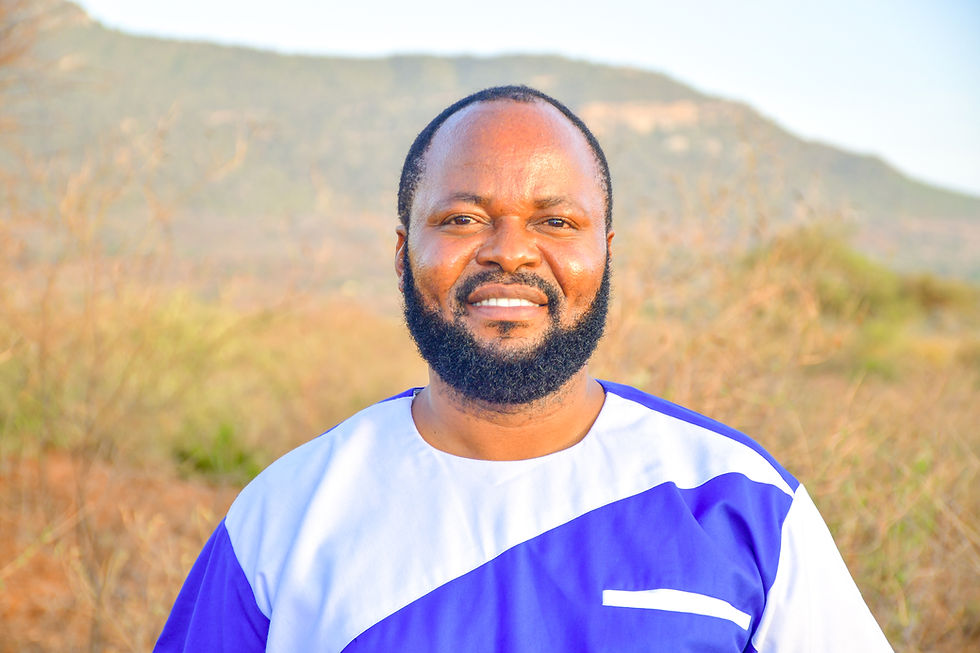
John Mwangeka Mwakima is a community leader from Taita Taveta County, founder of the Community Based Organization, ABCDE Trust, and a long-time advocate for climate action and sustainable development. As a member of the Marungu Hills Conservancy Association and Chairperson of the Marungu Community Relations and Advisory Committee, he helps protect local forests and strengthen collaboration between the Kasigau Corridor REDD+ Project (KCRP) and surrounding communities. He also serves in leadership roles within local schools.
Having witnessed first-hand how the Kasigau REDD+ Project has transformed lives in his home region, John has become a powerful voice for community-led conservation.
In this Q&A, he shares why he believes forest communities are too often spoken about, and not listened to, and how that conviction inspired him to produce a community-led film series documenting the project’s real impacts, from education and healthcare to forest protection.
By bringing frontline voices into the global carbon conversation, the series of short films, Voices from the Forest, offers something essential: testimony from those most directly affected when their stories are ignored.
What brought about the idea of making these short films that feature the voices of the community?
"When I started hearing criticisms about carbon projects globally, as someone who was born and raised in Kasigau, I felt compelled to respond. I have seen this project grow from scratch to what it is now. I have seen the real impact it has had on local communities and on the protected forests.
To me, it was very important to amplify the voices of local community members on global platforms, so that critics who have been muffling these voices can hear directly from the real frontlines of forest conservation. The community has moved from being charcoal producers to becoming protectors of the very forests they once depended on for survival. There was a time when the forests were almost bare, and here we are now.
Local community members now appreciate the forest. They have seen its socio-economic impact. So for their dreams to be shut down without them being heard felt deeply unfair."

Did you find that the community members were actually aware of these criticisms?
"Most community members were not initially aware of what was happening. However, over time, as funds from carbon sales decreased, they began to realize that something was wrong. They started to understand that the carbon market was struggling because of some of these criticisms.
When bursary funding decreased, that’s when the reality became very clear. Many students from poor families depend on these funds to stay in school. Without them, some students were at risk of having their studies discontinued. And when education is interrupted, it can mean the end of someone's dreams.
We have many powerful stories of people who were educated through this project and are now supporting their families. Because of this, community members really wanted to address the critics directly, to show them what the project is actually doing on the ground, and to explain that negative stories have very real consequences for their lives."
Who produced these films?
"It was very important for us to have a local crew from the project area produce these films. We believe that, as local community members, we have the capacity to document our own stories and share our own voices with the world, and so the entire crew from the ABCDE Trust, which produced these films, are locals to the community.
From past experience, we have seen journalists come to the area, collect stories, and then publish narratives that are completely different from what is happening on the ground. So we wanted a team that has lived within the community and truly experienced the impact of the Kasigau Corridor Project.
We wanted people who understand the local dialects, who would not struggle with translation or interpretation, and who could accurately convey the stories being shared. "
What is the threat of deforestation in the area?
"Beyond the socio-economic transformation, the Kasigau REDD+ Project has protected over 200,000 hectares of land that was at serious risk. People were cutting down forests because they had no other way to survive.
Climate change has made rainfall patterns unpredictable. Even now, you can go to the farm, till the land, and still have no rain. So what options do people have? The quickest and most accessible solution becomes the forest, by cutting trees, selling logs, making charcoal, or turning to illegal poaching and bushmeat trade. These are all highly destructive practices.
That’s why it’s important for the world to understand how a project like this can transform lives while strengthening conservation efforts. "

What were some of the most memorable stories you heard during production?
"We met people who used to walk tens of kilometers just to find water, and they were able to demonstrate how water is now available right at their doorstep.
We also spoke with bursary and scholarship beneficiaries who said that without the carbon project, they would never have achieved their dreams. Some are now conservationists, many are teachers, and others are engineers. Every story we captured was deeply moving.
One story that stood out was of a young girl at a local school who spoke about the school feeding program. She was so excited and grateful, explaining that when meals are provided at school, students can stay focused. Sometimes they go home and there is no food, but with meals at school, they are able to concentrate on their studies.
Another powerful story came from an elderly man who has witnessed the transformation brought by the Kasigau REDD+ Project. He spoke about how the project impacts more than 120,000 residents and asked, how can anyone spread negative stories about something so transformative? Where would these people go? What would they do?
He said, “This is our project. We are co-owners. We know what it means to our lives. We have seen the transformation. We love our project, and we want people to work with us so that we can continue to see more impact”. That testimony stayed with me. "
Making these films allowed you to travel all around the project area. What were your takeaways?
"As we traveled through the project area during production, it was incredible to visit different health centers. At Buguta Health Center, for example, the maternity block had been incomplete for years due to lack of funding from the county government.
However, one community-proposed project at the same facility, the expansion of the outpatient block, moved very quickly. Construction began, progressed within the stipulated timelines, and was completed even before our films were released.
This shows how focused the project is on realizing the priorities of local community members. Through locally elected governance structures, communities are able to oversee how funds are used and track key milestones of infrastructure projects.
It was remarkable to see a project that the county government had struggled to complete for years overtaken by one built through local governance using carbon project revenue. These are real, visible impacts on the ground, and we have documented them for the world to see. "
All of the films in the ‘Voices from the Forest’ series can be viewed here: https://www.youtube.com/playlist?list=PLk5y1CNZh1jIBJjnLjq-CYDzSzY2Wjm6x


