Between River and Forest: Understanding the Cultures of Community Partners at the Gerbang Barito REDD+ Project

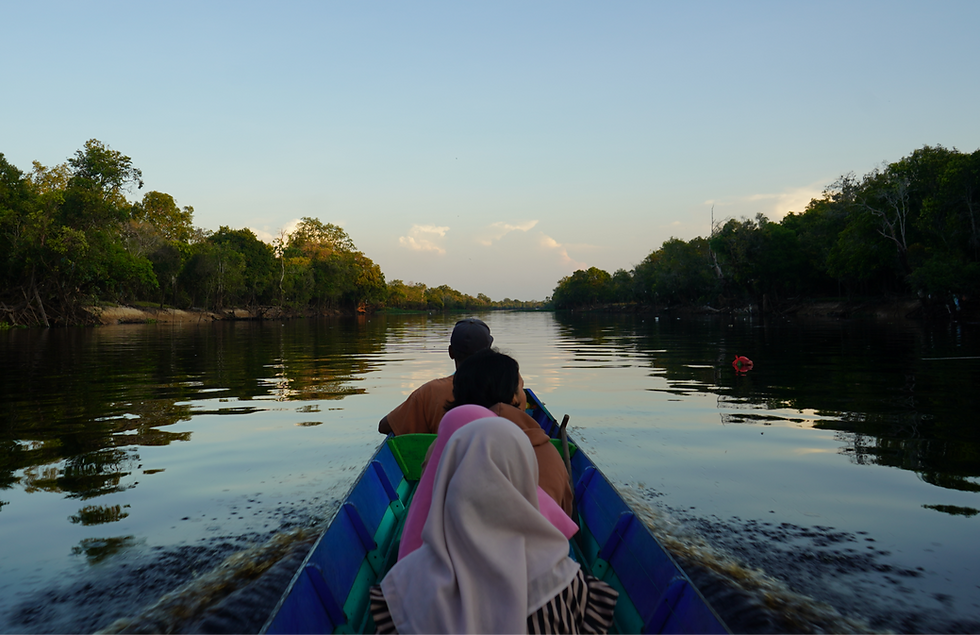
Along the wide bends of the Barito River, where water slowly meets peatland forest, lie the villages of Batampang and Batilap—Bakumpai villages, home to a Dayak community whose identity has been shaped by generations of life along the river. Here, life unfolds at a pace guided by tides, seasons, and memory. For the Bakumpai people, the river and the forest are not simply parts of the landscape; they are living spaces, carrying stories, responsibilities, and quiet rules that guide everyday life.
The river has always been the main path. Boats move along it carrying fish, forest produce, and people visiting relatives upstream or downstream. Through the river, the Bakumpai learned to travel, trade, and adapt. It also brought encounters—with other Dayak groups, with Banjar traders, and with new beliefs. Over time, these encounters shaped a distinct identity rooted in Dayak heritage but expressed through a different historical path.


The Bakumpai are part of the wider Dayak world, sharing language roots, ancestral ties, and ecological knowledge with other Dayak groups along the Barito watershed. Their language remains closely related to Dayak Ngaju, and many customary values are shared. Yet the Bakumpai came to occupy a unique position among Dayak communities: they embraced Islam while continuing to live by adat, a system of traditional customs, laws, and, practices, that govern social behavior, natural resource management, and, cultural identity for Indigenous people. Their integration of Islam did not erase their Dayak identity. Instead, it layered it.

Rituals changed form, prayers took new words, but the moral relationship with land, river, and ancestors endured. Customary rules still guide when forests may be entered, how land is opened, and how resources are shared. Elders are consulted not because of formal authority alone, but because they carry memory of floods, fires, boundaries, and past mistakes. Their knowledge is practical, ethical, and deeply rooted in place.
In Batampang and Batilap, certain parts of the river and forest are remembered as special places. They are spoken of carefully, sometimes indirectly. These are places believed to be watched over, where the visible world and the unseen are closely connected. Stories of ancestral presence and guardian forces are passed down not as superstition, but as reminders of restraint. They teach people to slow down, to behave properly, and to remember that nature is not something that can be owned.
Before entering particular forest areas or opening land, people pause. Sometimes this means consulting elders, sometimes performing simple acts of respect. These practices do not seek to control nature, but to live within it. Taboos and unwritten rules serve as quiet boundaries, discouraging careless exploitation long before damage becomes visible.

Daily life in the villages is built on cooperation. Fishing areas are shared, harvests divided, and labor exchanged. Customary leaders help resolve disputes through discussion and balance. Women play central roles in managing households and local economies, while youth move between inherited knowledge and modern influences, navigating both worlds with ease.
The Bakumpai story is also a story of movement and negotiation. Living along the river has always meant openness: to change, to outsiders, to new ways of life. Yet identity here is not lost in that openness. It is maintained through language spoken at home, through stories told in the evening, and through practices repeated day after day. Being Bakumpai is not defined by rigid boundaries, but by continuity—knowing where one comes from while adapting to where one is going.
Today, Batampang and Batilap face growing uncertainty. Weather patterns shift. Dry seasons lengthen. Forest fires burn longer. Economic pressures increase. Still, resilience remains rooted in inherited knowledge: reading river levels, recognizing signs in the forest, relying on collective effort, and maintaining social bonds.
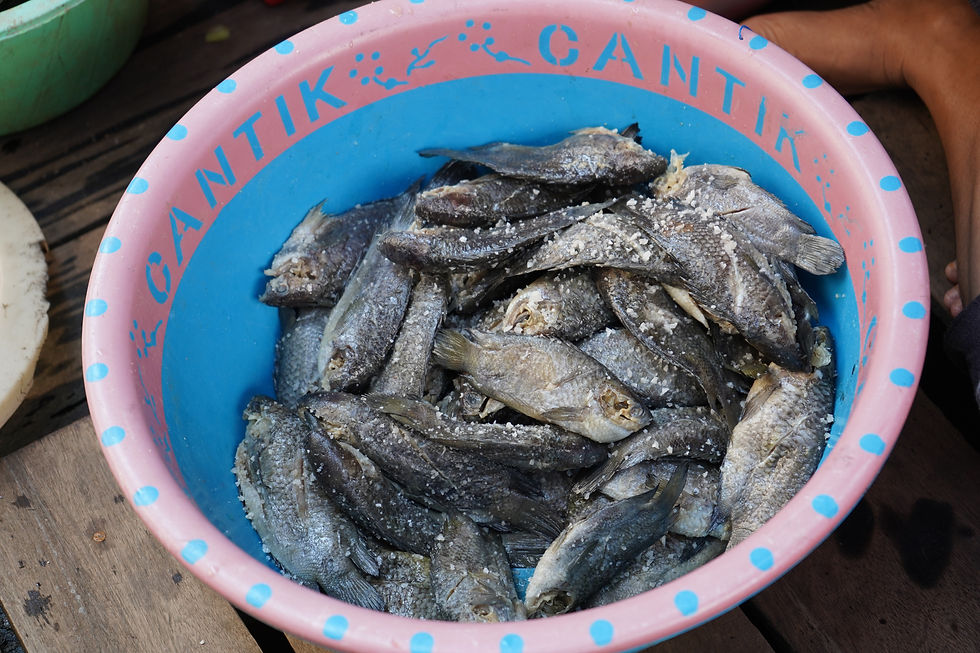
What stands out most is the quiet dignity of everyday life. Early mornings on the river. Nets lifted with practiced hands. Fish salted for future months. Conversations on wooden verandas as children listen and absorb more than they realize. History here is not written—it is lived.

Batampang and Batilap remind us that forests are not empty spaces waiting to be managed. They are lived landscapes, shaped by relationships between people, land, and belief. The Bakumpai did not choose between being Dayak or something else. They became Bakumpai by weaving ancestry, faith, river, and forest into a way of life that continues to hold.
As the sun sets over the Barito river, reflections stretch across the water, and the forest darkens at its edges. The river flows on, as it always has. And in Batampang and Batilap, the Bakumpai story continues—quietly resilient, deeply rooted, and still unfolding.