Gerbang Barito REDD+ Project in 2025: A Year of Resilience, Learning, and Breakthroughs
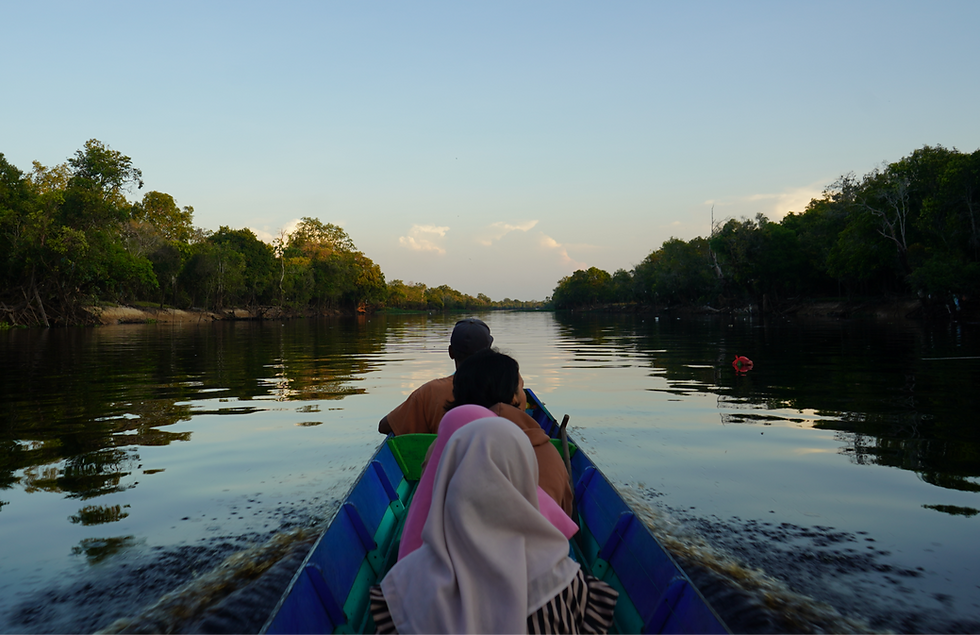
2025 was not an easy year for the Gerbang Barito REDD+ Project. Extreme flooding, shifting regulations, and uncertainty across the carbon market landscape tested both communities and institutions. Yet it was also a year that grounded the team. When the Wildlife Works team showed that they wouldn’t give up despite the many hardships, it deepened community trust, laying foundations that will define the project for decades to come.
What 2025 Taught Us

Last year severe floods, intensified by climate change, devastated villages across the project area, disrupting livelihoods and making the realities of climate change feel immediate and personal. At the same time, 2025 revealed the strength of local institutions, the importance of being present in moments of crisis, and the power of youth voices in shaping the future. As one reflection from the year put it:
“2025 was not easy — but it grounded us. It made us sharper, more intentional, and more connected to the communities we serve.”
Stronger Forest Protection, Built from the Ground Up
One of the most significant achievements of 2025 was the transformation of the community’s forest protection system. From more than 100 applicants, 22 patrol members were selected through a transparent, community-backed process. They completed multi-stage training covering safety, navigation, SOPs, and mapping, and now operate on defined routes with structured data collection and formal recognition from village governments.
This patrol force has become a cornerstone of forest governance. “I used to see people cutting down trees in my village. Some were even my neighbors,” says Deni, a 22-year-old from Batampang who joined the patrol out of his love for the forest. “At first, I thought it was normal, but then I realized how much it was harming the environment. We must keep the forest alive for our children and grandchildren.”

Standing with Communities Through Crisis
When floods displaced families and submerged homes, conservation took on a different meaning. Emergency health posts were established, treating hundreds of patients, while more than 800 aid packages were delivered across the year. Midwives, community cadres, and the Wildlife Works Indonesia team worked side by side.
“In some years, conservation is not about carbon or data. It’s about being there when people’s homes and livelihoods disappear.”
Technical Foundations That Will Last for Decades
Last year, the project’s scientific backbone was successfully completed. Biodiversity surveys documented over 60 species of birds and 25 herpetofauna species, alongside critical orangutan density estimates.
A comprehensive socioeconomic study that surveyed over 250 households revealed vulnerabilities, including that almost 70% of the households surveyed live below the provincial poverty line. These datasets are critical to the scientific foundation of understanding the project’s impact.

Youth: The Most Transformative Story of the Year
One of the most unexpected breakthroughs of 2025 came from young people. Through writing competitions, reading clubs, and photography workshops put on by the Wildlife Works team, youth from the community began telling their own stories of life in the forest. Tutors grew into confident leaders, creative groups formed independently, and young participants emerged as community communicators.
“When young people find their voice, forest protection becomes their story.”


Women’s Voices and Cultural Foundations
Wildlife Works led studies with women’s groups, which highlighted both the heavy burdens they carry and the immense potential for their leadership. Women stabilize households during crises, hold ecological knowledge, and are eager to engage in conservation-linked livelihoods. An anthropological study further underscored that this project exists within a living cultural landscape shaped by deep beliefs and forest stewardship traditions. These insights are shaping how benefit-sharing, FPIC, and governance are designed.


Institutions That Are Ready for REDD+
Local community governance of forests strengthened rapidly last year. Social Forestry assessments from Indonesia's government showed the community forest governance systems at Batilap and Batampang villages scoring Very Good, meeting strong national criteria for village forest management. These results signal that community institutions are ready to steward REDD+ responsibilities with credibility and confidence.

Mapping Canals to Understand the Forest
The Gerbang Barito REDD+ project is defined by peat swamp forests, which play a crucial role in carbon storage and water regulation. To effectively protect them, the project aims to effectively map the hydrology of the area. Throughout the second half of 2025, teams mapped canals under challenging conditions, recording depth, width, topography, and flow barriers. This work may be invisible to outsiders, but it is foundational: a REDD+ peat project cannot stand without understanding how water moves through the land. These findings now underpin future peat protection and restoration planning.

From Developing Project Site to Learning Site
In 2025, Gerbang Barito became a place others came to learn. Social forestry groups from Riau visited the site to exchange knowledge on REDD+ readiness, governance, and patrol systems. For the first time, the project was recognized as a reference model: a milestone that reflects years of quiet, patient institution-building.

Looking Ahead to 2026
With foundations in place, 2026 is about strengthening institutions and growing the seeds that have been planted. Priorities include VCS registration, finalizing a clean PDD, strengthening governance institutions, launching a youth-led communication platform, and preparing a robust benefit-sharing framework. The work ahead builds directly on the resilience shown in 2025.
2025 was the year Gerbang Barito became grounded.
2026 will be the year it rises, carrying forward the courage, patience, and collective belief that this work truly matters.
Download the full report here:


